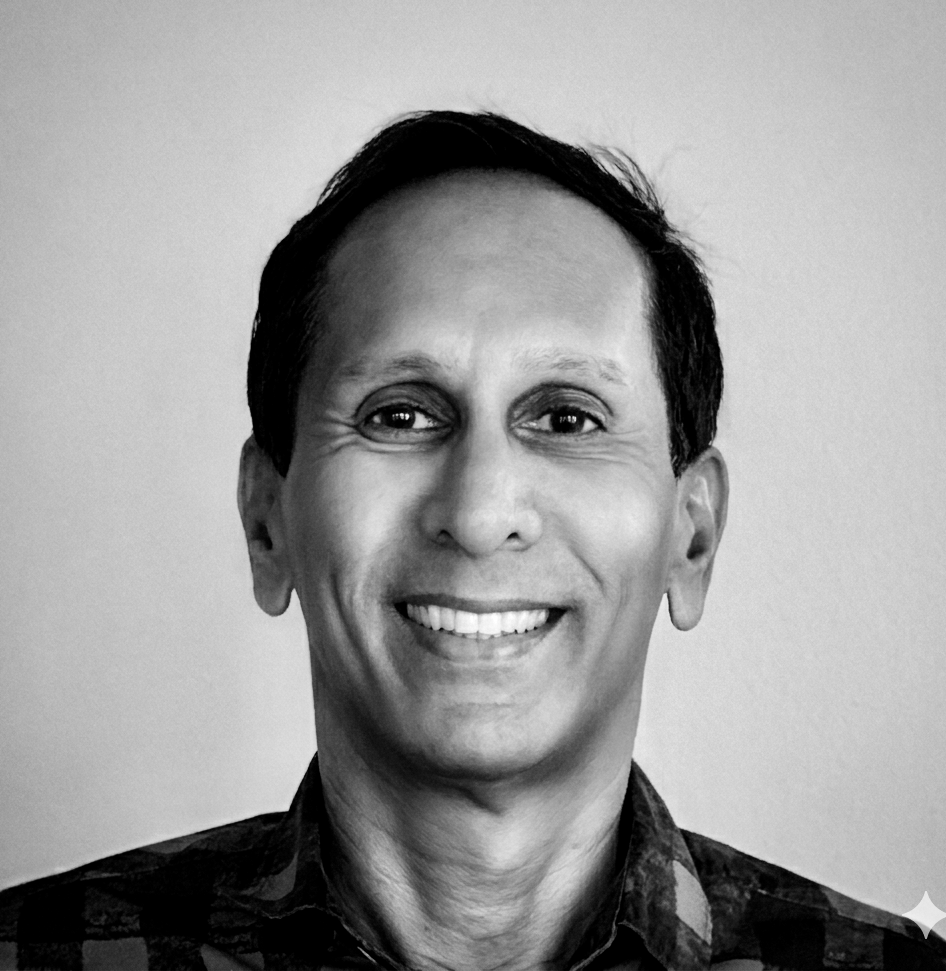
Neil Gehani founded Mind Lumen because he spent three years trying to find safe, ethical psychedelic care, and couldn't. What he found was a field growing fast on good intentions, with no independent way for a seeker to tell how to trust. The problem wasn't the absence of a filter for a directory of providers. It was the absence of a trust infrastructure: nothing that made ethics observable, measurable, and accountable in a way anyone could actually use.
That TRUST gap became his mission. Ethics Matters!, and it is also the precise diagnosis of what the psychedelic healing ecosystem is missing: not more intention, but a functioning accountability layer that converts ethics from aspiration into something tangible. Trust is built on transparency. Mind Lumen is building systems that are independent, unbiased, and therefore TRUSTED by those seeking and providing care.
That mission is grounded in field-defining academic work and practical experience. In August 2023, Neil was invited to Oxford University for the inaugural Johns Hopkins-Oxford University Psychedelic Ethics (HOPE) workshop, a joint conference between Johns Hopkins and Oxford University on the practical ethics of psychedelic healing. He is a contributor and co-signatory of the resulting HOPE consensus statement. He also published in the American Journal of Bioethics in January 2025, "Ethics Without Borders", examining how ethical frameworks must extend beyond clinical settings to reach the full spectrum of people seeking access. In 2025 he participated in the Harvard Law Psychedelics Bootcamp alongside the researchers, clinicians, and policymakers shaping the field's legal and clinical future.
The HOPE consensus named the problem exactly: no independent, conflict-free body capable of establishing and enforcing accountability standards for psychedelic practitioners. Licensing structures need 'clear and transparent codes of conduct, including accountability structures' to receive, report, audit, and adjudicate. No such body existed. Neil came home from Oxford and started to build one.
Mind Lumen is an independent 501(c)(3) nonprofit working to make ethics in psychedelic care observable, measurable, auditable. Its Ethical Reputation System scores providers against observable, verifiable criteria. Its Ethics Certification Program (modeled on B Corp) makes ethical excellence visible to elevate the most ethical providers. Its companion platform, Lumara, matches seekers directly to certified ethical providers, putting ethics before price and reviews as a first filter of trust. What makes this unique, scalable, and fundable is that it doesn't ask anyone to take ethics on faith: it makes ethics observable, measurable, and accountable, an approach designed to close the trust gap rather than only describe it.
Neil brings over twenty-five years of Silicon Valley product leadership to this, as a 3x Head of Product and 3x founder building platforms in security, cloud infrastructure, and marketplace systems.
That background matters more now than it ever has. In an era where AI makes it possible to build systems previously unachievable, the difference between ethics infrastructure that actually works and ethics infrastructure that stays aspirational is a structured framework and product methodology. The Ethical Reputation System isn't just a policy document. It can be designed and built with the discipline of someone who has spent two decades turning complex accountability requirements into scalable systems. AI is what makes Mind Lumen's approach executable at speed. Product rigor is what makes it defensible. But the most relevant experience is quieter: he is a neurodivergent Asian who sat with the disorientation of needing care in an industry that had no reliable way to visualize trust. He built Mind Lumen for everyone in that position, and particularly for the communities most invisible in this space. He co-founded the Bay Area Asian Psychedelic Society, and has spoken to legislators and been involved in advocacy organizations nudging toward decriminalization, believing that safe access and cognitive liberty must extend to the world's most underrepresented populations, not only those already privileged enough to navigate this landscape unaided.
He is not building a product. He is building the trust infrastructure that contributes to making an entire ecosystem safer.
Credentials and Recognition
- Signatory to the Johns Hopkins-Oxford University Psychedelic Ethics (HOPE) consensus statement Source
- Contributor, Johns Hopkins-Oxford University Psychedelic Ethics (HOPE) consensus statement Source
- Author, "Ethics Without Borders", American Journal of Bioethics
- Participant, Harvard Law Psychedelics Bootcamp 2025
- Co-founder, Bay Area Asian Psychedelic Society Source
- Over twenty-five years of Silicon Valley product leadership